Field Notes · November 26, 2026
Slop, water and flattery: journalism's outdated picture of AI
My students came in seeing AI as a slop machine that drains water and tells you what you want to hear. I wanted them to leave knowing what it can actually do and what's at stake.
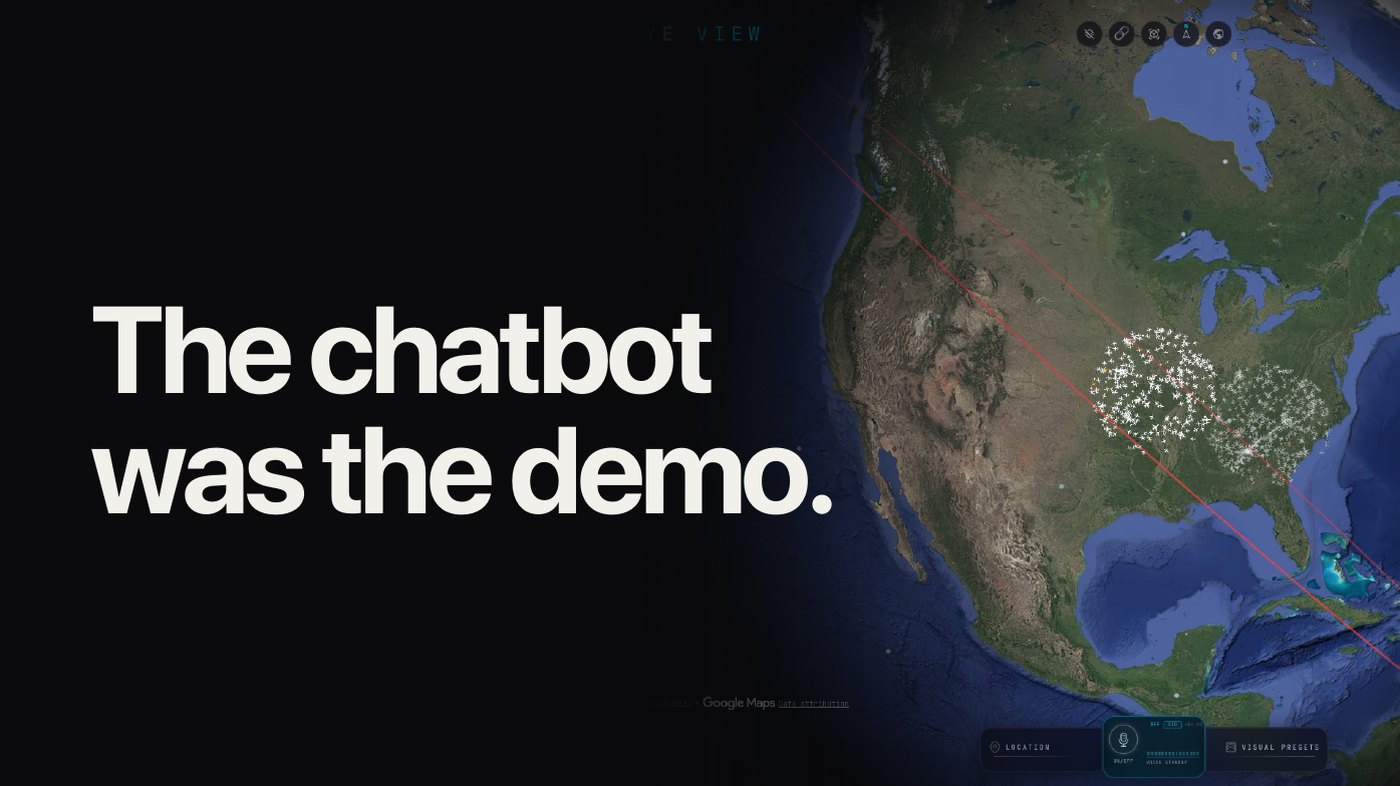 The opening slide of my AI class this fall.
My students came in with a lot of feelings about AI. Some hate it. Many are anxious about what it means for their careers, and they’re not alone: 75% of arts, design and media students expect AI to hurt their job prospects (Inside Higher Ed). Plenty of working journalists and academics share that dread, picturing AI as little more than a bad-writing machine with a massive carbon footprint.
That picture is already out of date. The chatbot was just the demo. Today’s AI agents browse the web, write and run code, and check their own work. Journalism doesn’t have a great track record with new technology, and part of the problem is who we measure ourselves against. We compare ourselves to other newspapers, while influencers, Substack writers and short-form video creators are already using AI to research, edit and reach their audiences. That navel-gazing keeps us insular, and it costs us. Too much of journalism’s AI debate is about signaling where you stand rather than understanding what the tools actually do. Meanwhile, the industry is moving with or without us, and AI is fast becoming a baseline requirement just to keep up.
Letting them vent
So I didn’t open with a lesson. I let my students vent, for a long time, to get that anxiety out in the open. Then we turned it into a critical-thinking exercise. Where the facts backed up their concerns, I said so. Where they didn’t, I argued the other side. The goal wasn’t enthusiasm. It was an informed opinion.
What it costs
Take water and energy. One prompt is small, about nine seconds of TV by Google’s count (MIT Technology Review). All of it together is not small, and the costs land on specific neighborhoods: gas turbines powering xAI’s supercomputer near Memphis (NAACP), families near Meta’s Georgia data center suing over their wells (AJC). Still, a lot of the reporting on this is thin, and that’s partly journalism’s fault. Once you understand how data centers are cooled, many of the water problems look solvable through gray water recycling, evaporation recapture systems and closed-loop cooling. In 2023, the Southern Nevada Water Authority banned evaporative cooling in new commercial and industrial buildings, pushing new Las Vegas data centers toward closed-loop designs (The Nevada Independent). Those fixes haven’t been adopted everywhere because the industry grew so fast with almost no regulation.
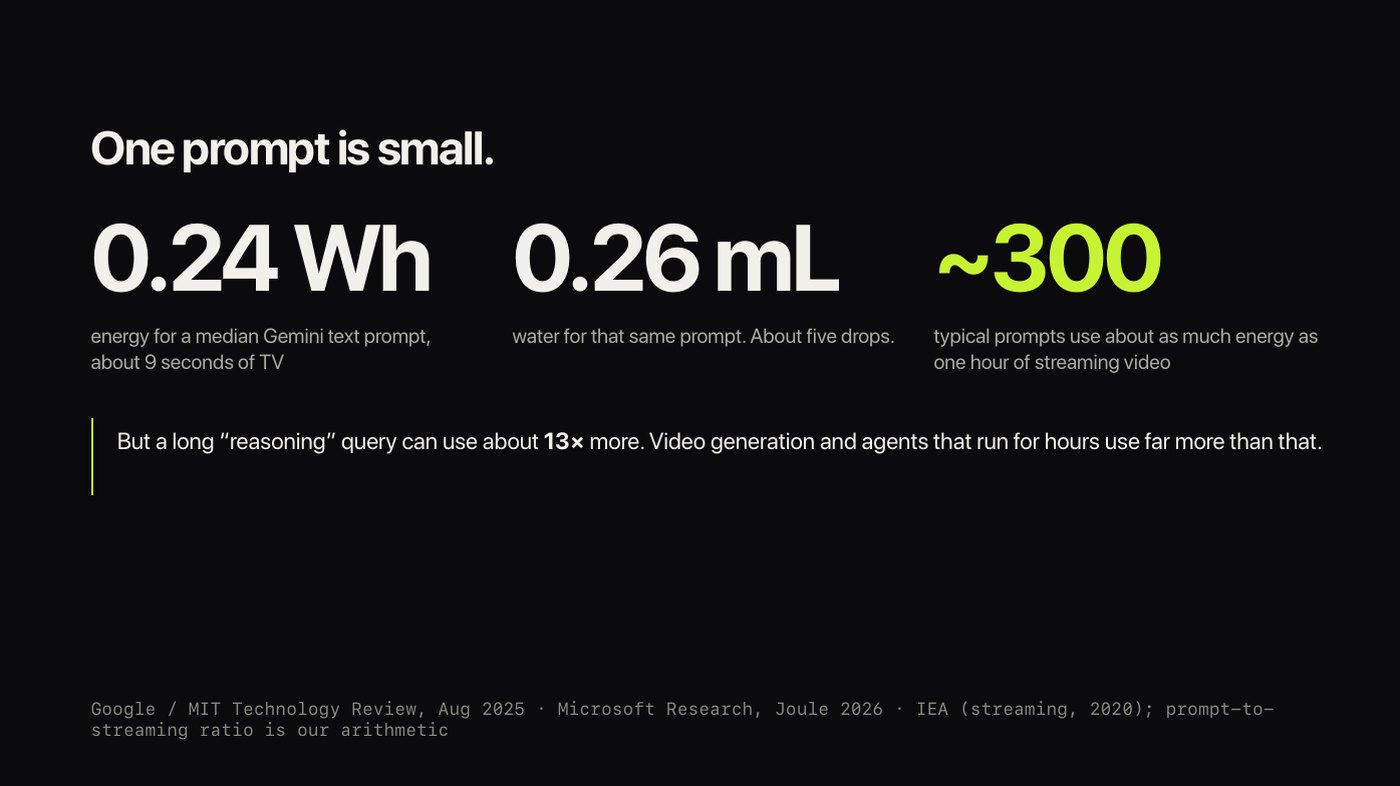 From my class slides: what one prompt costs.
What it’s good for
From there, we looked at what AI is actually good for: better research, better storytelling, and the grunt work no reporter has time for. That means checking a dozen agenda pages every morning, tracking records-request deadlines, writing the code behind an interactive and drawing the in-between frames of an animation. It’s how the best newsrooms already use it: a record eight Pulitzer winners disclosed AI use this year, mostly to sort and cross-check massive document dumps (Nieman Lab).
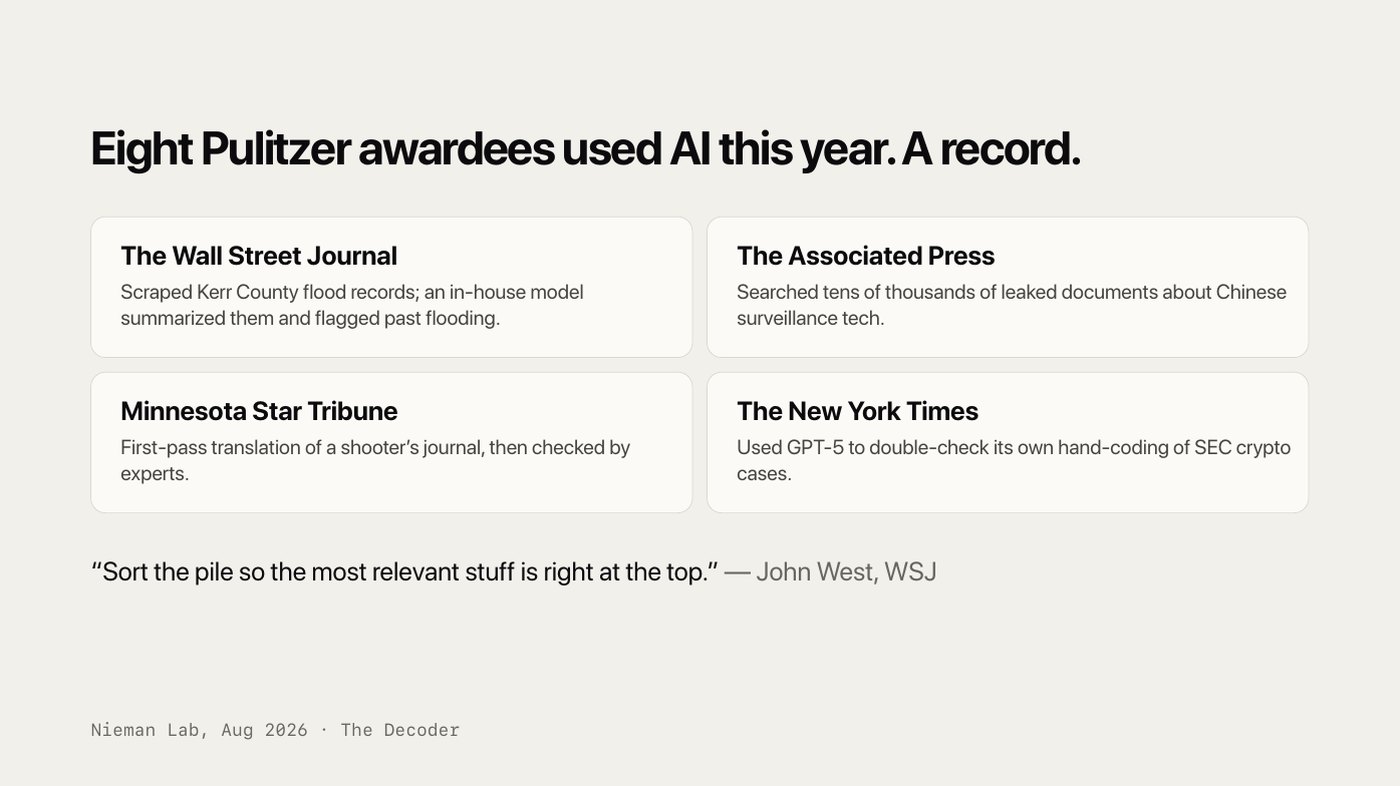 From my class slides: how this year’s Pulitzer winners used AI.
Three workshops
This fall, I built three two-day, in-class workshops for Foundations of Interactive Journalism, my graduate course at Medill. Each one put a different kind of AI agent to work on a real Chicago story.
Your AI Assistant, On Assignment
The grunt work here is watching a beat. In Illinois, most public bodies only have to post an agenda 48 hours ahead, often buried as a PDF on one of a dozen sites. No reporter can check them all. An agent can. Students set up Meta’s new personal agent, Muse, and had it track Chicago’s $882 million budget gap across three to five agenda and news pages, morning and night, while we were away. Then each student pointed it at their own beat, running in the background to file a daily report, monitor community calendars, check council meetings and summarize transcripts. Back in class, we verified its work against the original sources. It surfaced events and sources we didn’t know about or hadn’t thought to look for, though it also gave up too easily when things got messy. If a public calendar was only posted as a PDF, the agent would simply say it couldn’t pull a live calendar and stop. Students had to push back and tell it to read the PDF each time and build a calendar from it anyway.
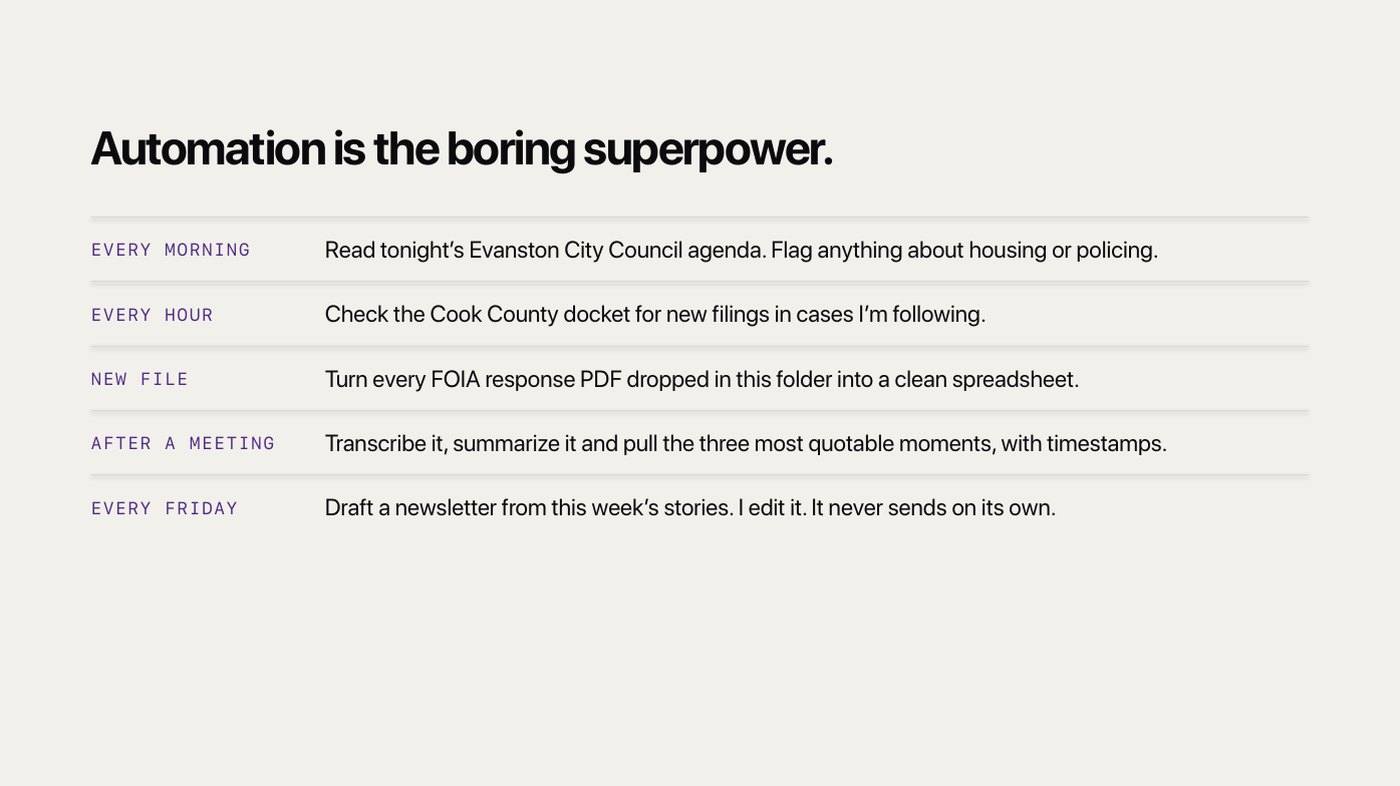 From my class slides: agents on a schedule.
Build It with an AI Coding Agent
Here, the grunt work is the code. Most of my students had never written a line of it. In two days, they built and published working interactives (quizzes, beat trackers, reporting tools, portfolios) by describing them to a coding agent. My own example, the Gap City budget game, took 29 minutes. Students learned to specify what they wanted in detail, test the experience like a reader, and check the facts and sources like an editor. They also learned to force the agent to fact-check itself along the way.
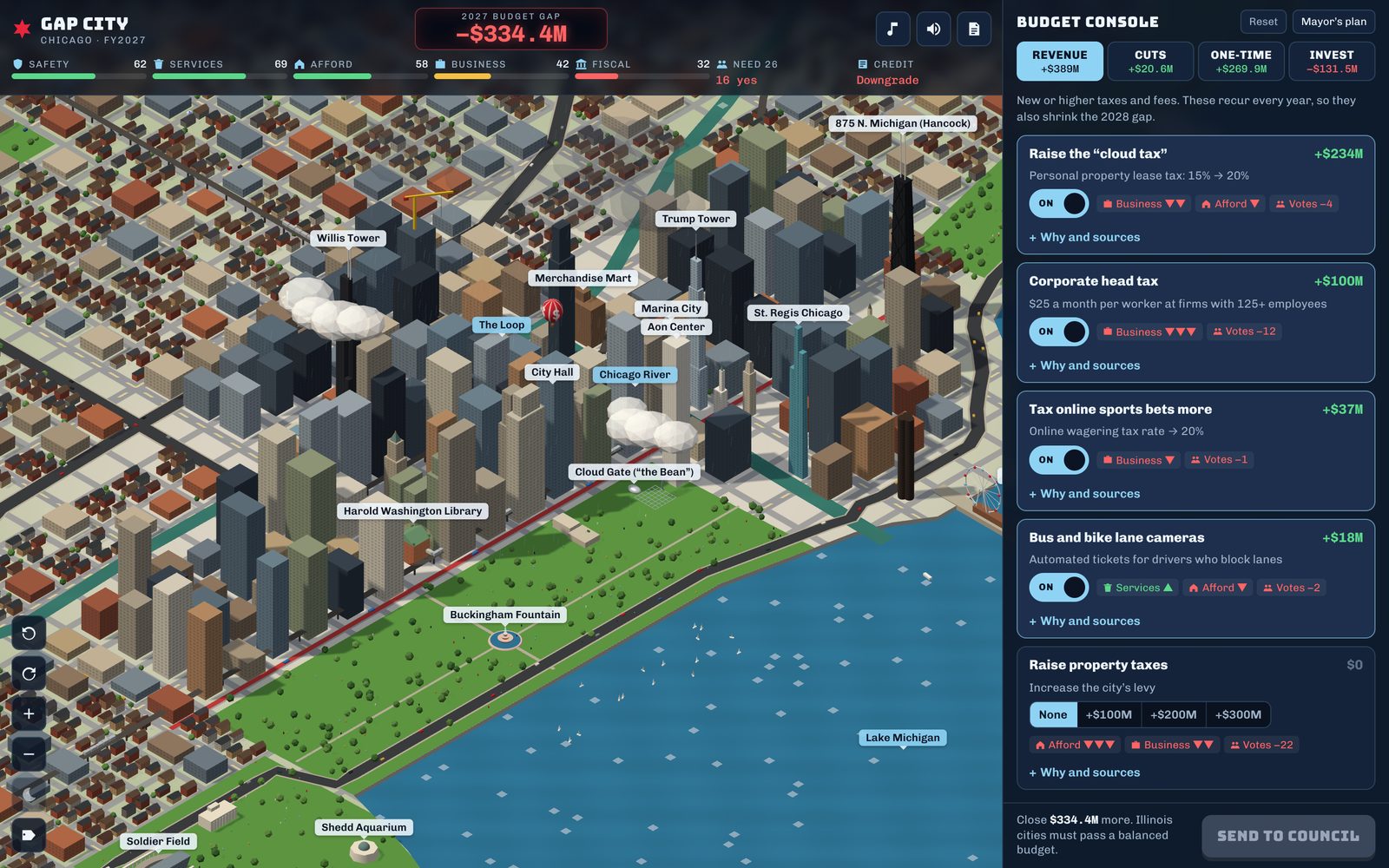 Gap City, the budget game I built with a coding agent.
Explain It in Motion
For animation, the grunt work is in-betweening. Animators have always set the key poses and handed off the frames in between. Students animated a falling leaf by hand to learn what good motion feels like, storyboarded a 30-second explainer on fast fashion, then pasted that storyboard into a coding agent and watched it render. A clear storyboard turned out to be the best prompt there is. It was 90% of the work already. AI just helped get it across the finish line.

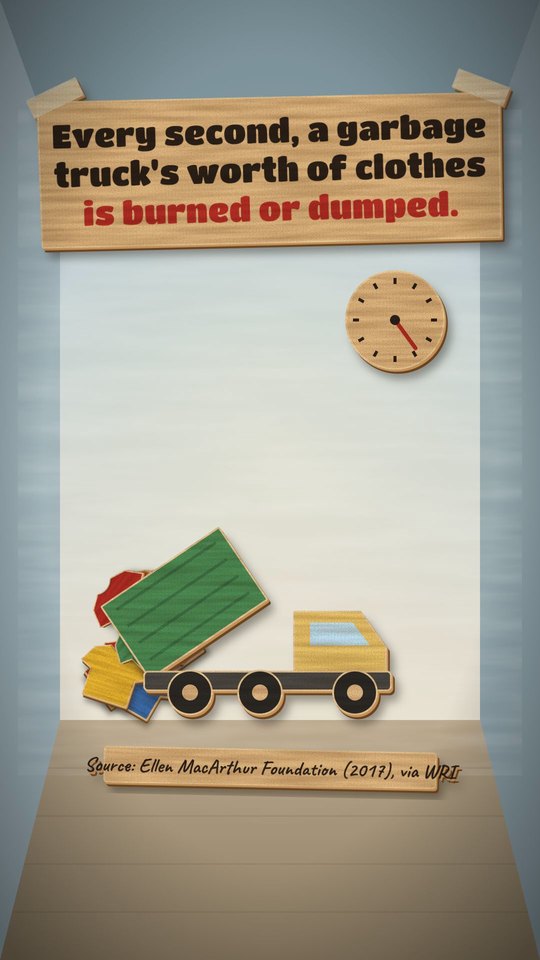
Left: the key poses of the falling leaf students animated by hand. Right: a frame from a fast fashion explainer a coding agent rendered from a storyboard.
An informed opinion
Not every student left a fan, and that’s fine. The point was never to convert them. It was to replace a gut reaction with an informed opinion. They left knowing what AI costs, where it fails and what it can actually do, because they used it, checked its work and decided for themselves what to hand off. That’s worth more than a feeling, in either direction.
I think journalism and teaching both need that same reframe. Taking a stand against AI can feel like the responsible thing to do. But refusing to learn it doesn’t protect anyone. It just leaves the decisions to the people who did. Our students deserve teachers who have used these tools, checked them, and can tell them honestly where they help and where they don’t.